Pre-emptive decision making training – Psychological preparation for pressure

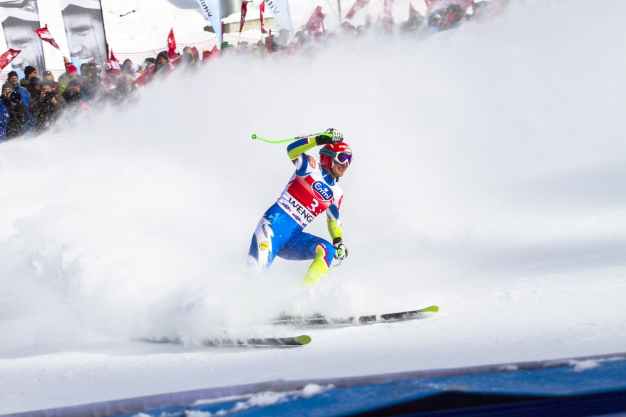
High Performance (HP) sport places pressure in a sustained manner, psychological and physiological on a person in various training and competitive environments. In some instances the person, the athlete, copes, adapts and responds to an often rapidly changing, dynamic environment and flourishes. This personal and athletic growth, in a manner described by Lazarus and Folkman (1984) as responding to these stresses via the perception of the various environments as a challenge is advantageous for sustained HP success. Some people in the HP setting can on occasion display behaviours, emotions and athletic qualities that are negatively altered by decision making in situations of perceived high pressure.

american sports
Photo by Skitter photo on Pexels.com

The focus of this blog is to discuss the value of the preparatory process of pre-emptive appraisal of various HP athletic environments to optimise real time decision making. Such psychological practice processes are proposed to mediate emotion, described as Lazarus (2000) as an ‘appraisal’ in a manner that allows optimal human performance , psychologically and physiologically.

The process of pre-emptive relational meaning to any anticipated event, or unanticipated event, in the sporting environment to align with a challenge based decision making process would arguably position the HP athlete to align motor performance skills with far more stable decision making capabilities. Given the time most HP athletes spend with physical preparation, it is arguable that sufficient time should be given to ‘decision making’ training.

An example of  the positive effect of integrating effective decision making with high level athletic performance can be seen in the final stages of the 2015 NFL Superbowl in which Malcolm Butler, a rookie player from the New England Patriots makes a game saving interception based on a decision making process achieved through training rehearsal (motor performance).

For readers who are interested the attached link discussing this play in Superbowl  XLIX is a example of HP sport, pressure, decision making and emotion. See link below. https://youtu.be/MeNYQaS3rZI

About the author
Stuart has been a physiotherapist for over 24 years. With post graduate education in both sports physiotherapy and high performance he has assisted thousands of athletes in a variety of sports utilising a holistic athletic development framework, rehab and performance programs. He has spent several years working in elite cycling and was the founder & director of one of Australia’s largest high school based sports academy’s. 

References.

Lazarus, R S (2000) How Emotions Influence Performance in Competitive Sports. The Sport Psychologist, 14; 229 – 252

Lazarus R S and Folkman S (1984) Stress, appraisal, and coping. New York: Springer


‘Athletes in the zone – The neuroscience of perception into action’

Elite athletic performance is not simply correlated with expert performance in movement related skills such as running, jumping or throwing. High performance (HP) athletes have demonstrated to have superior perception, anticipation and decision making abilities (Yarrow et al 2009). These abilities are often performed in sporting environments that have very short time frames for decision making and contextually have significant implications for ongoing individual and/or team success.

sport bike bicycle cyclist
Photo by Chris Peeters on Pexels.com

Given these various elements of perception (sensory input) and acting (motor output) are ultimately a brain-mind driven experience, what are the elements of central nervous system function that require consideration by HP professionals in training design and competitive performance?

When talking to many elite athletes they will often reflect on periods of play, games or enhanced skill execution that occurs ‘in the zone’. This optimal state of athletic performance is also referred to as a ‘flow’ state (Kotler & Wheal, 1999). Flow states and the associated neuroscience is increasingly receiving attention not only in sports that have a high risk of physical injury or death (big wave surfing, base jumping, high speed motor sports) but other sports that require and athlete to perceive and act in an environment that is often rapidly changing with high numbers of variable sensory inputs and potential outcomes to decision making.

action adult athlete championship
Photo by Pixabay on Pexels.com

Athletes operating optimally in the ‘zone’ or in flow will have reduced activity in the dorsolateral prefrontal cortex which is the region of the brain often described as the minds ‘inner critic’. They will often describe periods of time where they report to see and feel like events are happening in slow motion allowing a greater perceived time to make decisions (Jackson & Csikszentamihayli 1999). HP athletes who can excel above those of their peers can often have an enhanced ability to quieten the ‘voice of doubt’ and optimise performance by utilising this brain-mind state with the flood of focus and performance enhancing neurotransmitters such as norepinephrine, dopamine, endorphins and serotonin.

In an age of using increasing levels of intellect in the HP environment, optimal performance outcomes may be best achieved by athletes learning to optimise flow states.

Key words:    High performance     Athletes     Flow states     Neuroscience

References.

Jackson S and Csikszentamihayli M (1999) Flow in Sports. Champaign: Human Kinetics.
 Kotler S and Wheal J (2014) The Rise of Superman: Decoding the science of ultimate human performance. New York: Houghton Mifflin Harcourt Publishing Company.
Yarrow K, Brown P and Krakauer JW (2009) Inside the brain of an elite athlete: the neural processes that support high achievement in sports. Nature Reviews Neuroscience 10: 585 – 596


Giving an emotional performance

Growing bodies of research, particularly studies that incorporate enhanced knowledge of neuroscience in human performance, is expanding our understanding of the importance of emotion over pure reason, social connections over individual choice and character over intelligence (Brooks, 2011). This knowledge is combined with real life demonstrations and anecdotal evidence that emergent, organic, complex systems serve us better in performance optimisation than linear, mechanistic ones. My experience of a variety of high performance (HP) settings is certainly in contrast to that opening sentiment.

group of lacrosse players celebrating with coach during daytime
Photo by Pixabay on Pexels.com
Growing bodies of research, particularly studies that incorporate enhanced knowledge of neuroscience in human performance, is expanding our understanding of the importance of emotion over pure reason….”

Emotional considerations are not often placed as an important consideration in performance optimisation. Too often the directive in HP sport has been ‘Get out there and get the job done’. There was often little to no individual choice and athletic ‘leadership’ positions were directed rather than organically allowed to evolve within a group dynamic. Certainly the measurement and development of performance was attempted with no measures or support of emotional ‘performance’.

So how does and should this expanding volume of research influence athletes and professionals working in the HP setting?

Those involved in a HP setting are encouraged not to take an overly simplistic view of human nature, particularly given the importance of emotion in ‘action’ (Lazarus 1991). HP coaches are encouraged to avoid the consistent use of rigid approaches to skill acquisition, performance or competitive success. HP programming instead is encouraged to consider the growth and development of an individual’s emotional state, including the expansion of resilience through controlled exposure of new boundaries in performance and introspective practice such as mindfulness. This emotional growth includes the use of ‘gut feelings’ in performance given that every emotion that arises in the brain is mirrored in the gut (Mayer, 2016). The copious amount of ascending sensory input to the brain from the gut can influence mood and emotion and is considered a new avenue for HP professionals to influence athletic performance via the optimisation of gut health and dietary habits.

About the author
Stuart has been a physiotherapist for over 24 years. With post graduate education in both sports physiotherapy and high performance he has assisted thousands of athletes in a variety of sports utilising a holistic athletic development framework, rehab and performance programs. He has spent several years working in elite cycling and was the founder & director of one of Australia’s largest high school based sports academy.
References
Brooks D (2011) The Social Animal. A story of how success happens. Random House: New York.
Lazarus RS (1991) Emotion and adaptation. New York: Oxford University Press
Mayer E (2016) The Mind-Gut Connection. New York: HarperCollins Publishers.